

- University
- Academic
- Schools/Vocational Schools
- Vocational School of Justice
- Vocational School
- Vocational School
- Department of Banking and Insurance (Turkish)
- Department of Computer Programming (Turkish)
- Department of Foreign Trade (Turkish)
- Department of Graphic Design (Turkish)
- Department of Interior Design (Turkish)
- Department of Construction Technology (Turkish)
- Department of Occupational Health and Safety (Turkish)
- Department of Media and Communication (Turkish)
- Department of Architectural Restoration (Turkish)
- Department of Radio and Tv Programming (Turkish)
- Department of Civil Aviation Cabin Services (Turkish)
- Department of Civil Aviation Transportation Management (Turkish)
- Department of Tourism and Hotel Management (Turkish)
- Department of Applied English Translation
- Vocational School Of Health Services
- Vocational School Of Health Services
- Department of Child Development (Turkish)
- Department of Physiotherapy (Turkish)
- Department of Paramedic (Turkish)
- Department of Opticianry (Turkish)
- Department of Medical Documentation and Secreteriat (Turkish)
- Department of Medical Imaging Techniques (Turkish)
- Department of Medical Laboratory Techniques (Turkish)
- Department of Elderly Care (Turkish)
- School of Applied Management Sciences
- School of Foreign Languages
- Faculties
- Faculty of Arts and Sciences
- Faculty of Fine Arts and Design
- Faculty of Law
- Faculty of Communication
- Faculty of Business
- Faculty of Engineering
- Faculty of Engineering
- Department of Computer Engineering
- Department of Biomedical Engineering
- Department of Electrical and Electronics Engineering
- Department of Industrial Engineering
- Department of Food Engineering
- Department of Genetics and Bioengineering
- Department of Aerospace Engineering
- Department of Civil Engineering
- Department of Mechanical Engineering
- Department of Mechatronics Engineering
- Department of Software Engineering
- Faculty of Health Sciences
- Medicine
- Graduate School
- Common Courses
- Schools/Vocational Schools
- Research
- Research Centers
- Library
- Smart Campus
- Technology Transfer Office
- İzmir Sciencepark
- Continuous Education Center (EKOSEM)
- Children's University
- Ethics Committee
- Teaching and Learning Center (EKOEĞİTİM)
- Psychology Application and Research Center
- Researcher Training Coordinatorship
- Research Collaborations And Innovation Coordinatorship
- Campus
- INTERNATIONAL
- Contact
- 25TH YEAR
Department of Banking and Insurance (Turkish)
MBSME 200 | Course Introduction and Application Information
| Course Name |
Work-based Vocational Training
|
|
Code
|
Semester
|
Theory
(hour/week) |
Application/Lab
(hour/week) |
Local Credits
|
ECTS
|
|
MBSME 200
|
Spring
|
0
|
40
|
20
|
30
|
| Prerequisites |
None
|
|||||
| Course Language |
Turkish
|
|||||
| Course Type |
Required
|
|||||
| Course Level |
Short Cycle
|
|||||
| Mode of Delivery | - | |||||
| Teaching Methods and Techniques of the Course | Case StudyQ&ACritical feedbackApplication: Experiment / Laboratory / WorkshopLecture / Presentation | |||||
| National Occupation Classification | - | |||||
| Course Coordinator | - | |||||
| Course Lecturer(s) | - | |||||
| Assistant(s) | - | |||||
| Course Objectives | The purpose of this course is to enable students to apply the theoretical knowledge and professional skills they have acquired during their studies in a real-world work environment; it also provides them with the opportunity to gain firsthand experience with business processes, organizational culture, professional responsibilities, and occupational health and safety practices. The course aims to develop students’ professional competencies, enhance their adaptation to the workplace, and help them understand industry expectations. |
| Learning Outcomes |
The students who succeeded in this course;
|
| Course Description | This course is a hands-on course that enables students to apply the theoretical knowledge and professional skills they have acquired during their education in a real-world work environment; it also allows them to gain firsthand experience with business processes, organizational culture, occupational health and safety practices, professional ethical principles, and the requirements of the workplace. |
| Related Sustainable Development Goals |
|
|
|
Core Courses |
X
|
| Major Area Courses | ||
| Supportive Courses | ||
| Media and Management Skills Courses | ||
| Transferable Skill Courses |
WEEKLY SUBJECTS AND RELATED PREPARATION STUDIES
| Week | Subjects | Related Preparation |
| 1 | Course Overview: The Purpose, Scope, and Student Responsibilities of Workplace-Based Vocational Training | |
| 2 | Company Overview: The organization’s field of activity, organizational structure, departments, and division of responsibilities | |
| 3 | Occupational health and safety, emergency procedures, environmental safety, and risk identification | |
| 4 | Workplace rules, work procedures, organizational culture, professional ethics, confidentiality, and protection of personal data | |
| 5 | Recognition and use of professional tools, equipment, hardware, software, and technologies | |
| 6 | Analysis of workflow processes; task assignment, work planning, and time management | |
| 7 | Observing a professional practice and providing support during the implementation process | |
| 8 | The student’s performance of individual professional tasks and practices under supervision | |
| 9 | Midterm evaluation: an assessment of the work done, the progress made, and the challenges encountered | |
| 10 | Teamwork, internal communication, meeting procedures, and coordination with other departments | |
| 11 | Problem-solving, decision-making, quality control, and error prevention practices in the workplace | |
| 12 | Monitoring customer, user, supplier, or stakeholder relationships and communication practices | |
| 13 | An examination of current methods, technologies, standards, and best practices used in the industry | |
| 14 | Assessment of the student’s professional performance, self-assessment, and feedback from the workplace supervisor | |
| 15 | Semester Review | |
| 16 | Final Exam |
| Course Notes/Textbooks | |
| Suggested Readings/Materials |
EVALUATION SYSTEM
| Semester Activities | Number | Weigthing |
| Participation | ||
| Laboratory / Application | ||
| Field Work | ||
| Quizzes / Studio Critiques | ||
| Portfolio | ||
| Homework / Assignments | ||
| Presentation / Jury | ||
| Project | ||
| Seminar / Workshop | ||
| Oral Exams | ||
| Midterm | ||
| Final Exam |
100
|
|
| Total |
| Weighting of Semester Activities on the Final Grade | ||
| Weighting of End-of-Semester Activities on the Final Grade | ||
| Total |
ECTS / WORKLOAD TABLE
| Semester Activities | Number | Duration (Hours) | Workload |
|---|---|---|---|
| Theoretical Course Hours (Including exam week: 16 x total hours) |
16
|
0
|
|
| Laboratory / Application Hours |
16
|
40
|
640
|
| Study Hours Out of Class |
0
|
||
| Field Work |
0
|
||
| Quizzes / Studio Critiques |
0
|
||
| Portfolio |
0
|
||
| Homework / Assignments |
0
|
||
| Presentation / Jury |
0
|
||
| Project |
0
|
||
| Seminar / Workshop |
0
|
||
| Oral Exam |
0
|
||
| Midterms |
0
|
||
| Final Exam |
0
|
||
| Total |
640
|
COURSE LEARNING OUTCOMES AND PROGRAM QUALIFICATIONS RELATIONSHIP
|
#
|
Program Competencies/Outcomes |
* Contribution Level
|
|||||
|
1
|
2
|
3
|
4
|
5
|
|||
| 1 |
To be able to develop themselves in the subjects of obtaining the financial resources necessary for the activities of individuals and enterprises under the most favorable conditions and examining the use of the accumulated funds. |
-
|
-
|
-
|
X
|
-
|
|
| 2 |
To be able to discuss the role, importance and functions of the institutions providing banking and insurance services in the economic system |
-
|
-
|
-
|
-
|
X
|
|
| 3 |
To be able to evaluate the organizational structure, business processes, and service portfolios of banks, insurance companies, and other financial institutions operating in the sector. |
-
|
-
|
-
|
-
|
X
|
|
| 4 |
To be able to develop skills in identifying, measuring, and assessing financial and operational risks, and to acquire fundamental knowledge to understand and apply insurance products against these risks. |
-
|
-
|
X
|
-
|
-
|
|
| 5 |
To be able to recognize financial products offered in the banking and insurance sector, and to gain skills in effective marketing and sales, as well as managing long-term customer relationships. |
-
|
-
|
-
|
-
|
X
|
|
| 6 |
To be able to possess basic legal knowledge and closely monitor legislative changes relevant to the field. |
-
|
-
|
X
|
-
|
-
|
|
| 7 |
To be able to possess basic knowledge of accounting and analyze financial statements to evaluate the financial status of businesses. |
-
|
-
|
X
|
-
|
-
|
|
| 8 |
To be able to follow technological innovations in the financial sector and acquire knowledge about the role of blockchain and artificial intelligence applications in the industry. |
-
|
-
|
-
|
-
|
-
|
|
| 9 |
To be able to make decisions based on the principles of professional ethics, accountability and responsibility |
-
|
-
|
-
|
X
|
-
|
|
| 10 |
To be able to follow international financial markets and global economic indicators by using English at least at the A2 level of the "European Language Portfolio" |
-
|
-
|
-
|
-
|
-
|
|
| 11 |
To be able to analyze and interpret banking and insurance data, and to develop data-driven strategies for financial decision-making. |
-
|
-
|
-
|
-
|
-
|
|
| 12 |
To be able to acquire knowledge about the components of national and international systems and the implementation of sector policies. |
-
|
-
|
-
|
X
|
-
|
|
| 13 |
To be able to direct his/her education to a further level of education |
-
|
-
|
-
|
-
|
-
|
|
*1 Lowest, 2 Low, 3 Average, 4 High, 5 Highest
NEWSALL NEWS

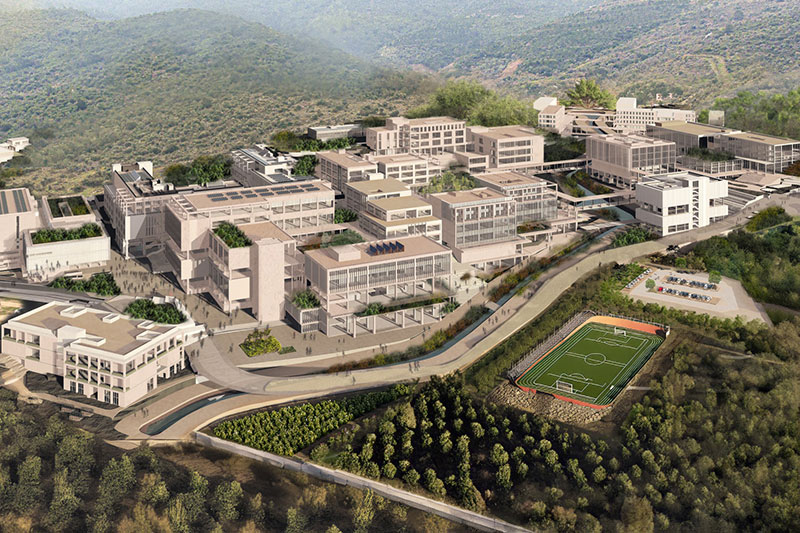
IZMIR UNIVERSITY OF ECONOMICS GÜZELBAHÇE CAMPUS
DetailsGLOBAL CAREER
As Izmir University of Economics transforms into a world-class university, it also raises successful young people with global competence.
More..CONTRIBUTION TO SCIENCE
Izmir University of Economics produces qualified knowledge and competent technologies.
More..VALUING PEOPLE
Izmir University of Economics sees producing social benefit as its reason for existence.
More..
You are one step ahead with your graduate education at Izmir University of Economics.